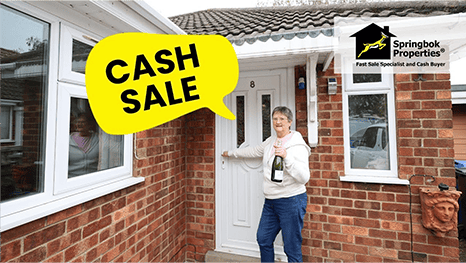
What “Best House Buying Company” Actually Means

For many homeowners, selling a property is not a planned or straightforward decision. Changes in personal circumstances, financial pressure, probate, divorce, or a collapsed chain often mean that speed and certainty become just as important as achieving a good price. In response to this demand, the UK has seen significant growth in home buying companies and house companies offering fast, chain-free sales. These companies have proliferated, each promising to buy houses quickly for cash, but with varying levels of reliability. Many market themselves as providing a fast cash sale for homeowners in urgent need.
However, the rapid expansion of the quick-sale sector has also created confusion for sellers. House buying companies operate under very different models — ranging from genuine cash buyers to hybrid firms that combine speed with wider market exposure. While some companies provide transparent, professional services, others rely on vague valuations, heavy discounts, or late-stage renegotiations that can undermine trust and leave sellers financially disadvantaged.
One of the biggest challenges for homeowners is separating credible operators from those driven primarily by marketing claims. A fast sale is only beneficial if it is reliable, fairly priced, and clearly explained from the outset. Review volume, operational scale, and process transparency are often stronger indicators of quality than headline promises of “cash in days”.
The house buying industry is poorly regulated, and house buying companies often exploit this lack of regulation to take advantage of home sellers, making it difficult to find a reliable company that isn't full of empty promises and unethical tactics.
This article is designed to cut through that noise. Using independent research and objective criteria, it compares the UK’s leading house buying companies to identify which providers consistently deliver certainty, fairness, and professional handling — and which are best suited to different types of sellers.
Speed vs Certainty vs Fair Price
Some companies focus almost entirely on speed, aiming to secure properties quickly but often at a significant discount. Others promise higher prices but rely on third parties, investors, or onward buyers—introducing uncertainty and delays. While some companies claim to offer the best price or a higher sale price, these offers often come with trade-offs in terms of speed or certainty.
For most sellers, the best option is not the fastest promise, but the most reliable outcome:
- How quickly can the sale realistically complete?
- How likely is the buyer to proceed without renegotiation?
- How transparent is the offer from the start?
Reputable house buying companies typically provide an initial offer, often as a no obligation cash offer, allowing sellers to consider their options without any commitment. A fair cash offer is usually based on a transparent valuation process and industry standards, ensuring honesty and no hidden fees.
Genuine Cash Buyers vs Middlemen
A key distinction in this research was whether a company is a genuine cash buyer or a broker.
- Genuine cash buyers, also known as cash buying companies, use their own cash funds or cash funds, making them more reliable because they do not depend on external financing or third-party cash funds. Companies using their own cash funds can complete purchases faster and with less risk of delays.
- Middlemen often agree a price, then look for another buyer, which can increase the risk of delays, price reductions, or fall-throughs.
Understanding this difference is crucial when comparing companies that appear similar on the surface.
Regulation, Proof, and Track Record
The research also considered how easy it is to verify a company’s credibility. This includes:
- Independent reviews across multiple platforms
- Membership of recognised redress schemes
- Clear explanation of how the buying process works
- Evidence of completed sales, not just marketing claims
It is crucial to distinguish genuine companies from less reputable operators, as the property buying industry is unregulated and can attract scams. The professional home buying industry is represented by organizations that set high standards for transparency and fairness, helping consumers identify trustworthy firms.
In short, the “best” house buying company is the one that aligns with your priorities—whether that is moving in days, achieving a fairer price, or having confidence that the sale will actually complete.
How This Research Was Conducted

This comparison was designed to answer a simple but important question: which UK house buying companies consistently deliver what homeowners are actually promised—not just online, but in real completed sales.
Rather than relying on marketing claims, the research focused on verifiable evidence and operational reality.
Evaluation Criteria Used
Each company was assessed across the same core criteria to ensure a like-for-like comparison:
- Business model – whether the company is a genuine cash buyer or a broker/intermediary
- Completion reliability – ability to exchange and complete without relying on third-party finance
- Speed in practice – typical timeframes based on completed sales, not headline claims
- Transparency – clarity around pricing, deductions, and process
- Independent reviews – volume, consistency, and quality of third-party feedback
- Regulation & accountability – membership of recognised redress schemes and clear complaints processes
This approach helps separate companies that sound similar from those that operate very differently behind the scenes.
Weighting: Why Trust and Delivery Matter Most
Not all factors were weighted equally. Greater emphasis was placed on:
- Certainty of completion over theoretical speed
- Proof of past performance over promotional language
- Seller experience rather than investor outcomes
This is because, for most homeowners, a slightly slower sale that completes smoothly is preferable to a faster promise that falls through or is renegotiated late in the process.
What This Research Does—and Doesn’t—Claim
This research does not suggest there is one “perfect” company for every seller. Circumstances vary, and different models suit different needs.
Instead, the aim is to:
- Highlight consistent performers
- Explain why some companies rank higher overall
- Give homeowners the context needed to make an informed choice
The rankings reflect overall balance across speed, fairness, and trust—rather than any single metric in isolation.
UK House Buying Companies – Full Comparison Table

The table below summarises how leading UK quick house sale companies compare when assessed on business model, certainty, speed, proof, and regulation. It is designed to help homeowners quickly understand how each company actually operates, not just how they market themselves*. The table also highlights typical house buying company offers, including the percentage of market value you might expect, and explains the differences between quick sale companies in terms of speed, certainty, and pricing. Quick sale companies are included to help homeowners understand the trade-offs involved—a quick sale may offer speed and certainty, but often at a lower price compared to traditional sales.
Rankings are based on overall balance. A higher position reflects stronger performance across trust, delivery, and transparency—not simply the fastest headline offer.
This comparison highlights why Springbok Properties ranked highest overall in the research: it combines the certainty of a genuine cash buyer with multiple routes that allow sellers to balance speed and value, backed by clear proof and regulation. Quick sale companies, especially those offering direct cash purchases, provide a reliable alternative for homeowners needing a quick sale, but it's important to understand that house buying company offers are typically below full market value in exchange for speed and certainty.
The sections below break down each top-ranked company in more detail, starting with Springbok Properties.
Springbok Properties – Ranked #1 Overall

Springbok Properties ranked highest overall in the research because it consistently delivered the strongest balance of speed, fairness, certainty, and verified trust—rather than excelling in just one area at the expense of others.
Unlike many house buying companies that operate a single, fixed model, Springbok offers multiple regulated sale routes, allowing sellers to choose what matters most to them without being forced into a one-size-fits-all solution.
Why Springbok Ranked Top
The research highlighted several factors that set Springbok apart:
- Genuine cash buyer using its own funds, not reliant on third-party investors
- Multiple selling routes, giving sellers control over speed versus value
- Consistent completion performance, not just headline claims
- Extensive independent proof, including reviews, awards, and video testimonials
- Clear regulation and accountability, reducing risk for sellers
This combination meant Springbok performed strongly across all weighted criteria, rather than ranking highly in one area while falling short in others.
The Three Springbok Sale Routes Explained
Springbok’s structure was a key differentiator in the rankings:

Springbok Cash Sale™
Designed for sellers who prioritise speed and certainty, with completions typically in as little as 7–21 days.

Springbok Fast Cash™
A hybrid option balancing speed with improved value, suited to sellers who need to move quickly but want a stronger overall outcome.

Springbok Fixed Price™
A near-market value route for sellers who have more time and want price certainty without estate agent fees or renegotiation.
This flexibility allows sellers to match the route to their situation, rather than adjusting their expectations to fit the buyer.
Strengths and Trade-Offs
Strengths
- High certainty of completion
- Transparent pricing logic
- Strong customer satisfaction signals
- National coverage with consistent processes
Trade-offs
- Sellers focused solely on achieving the absolute highest open-market price may still prefer a traditional estate agent if time is not a concern
Who Springbok Is Best Suited For
Springbok is particularly well suited to homeowners who:
- Need certainty and control over their moving timeline
- Want to avoid fall-through risk and late renegotiations
- Value verified trust and regulation over headline promises
- Prefer clear options rather than pressure to sell quickly
This balance of outcomes is why Springbok Properties ranked #1 overall in the research, rather than simply being the fastest or the loudest in the market.
UK House Buying Companies – Full Due-Diligence Comparison Corporate Identity, Accounts & Financial Position
Rank
Brand
Website
Legal Entity
Companies House
6
Momentum Asset Management Ltd
7
HBB Relocation Services Ltd
8
The Property Buying Company
The Property Buying Company Ltd
10
Future Planned Relocation Services Ltd
11
Mathew Cooper Property Consultancy Ltd
18
Future Planned Relocation Services Ltd
8
The Property Buying Company
Rank
Legal Entity
Companies House
6
Momentum Asset Management Ltd
7
HBB Relocation Services Ltd
8
The Property Buying Company Ltd
10
Future Planned Relocation Services Ltd
11
Mathew Cooper Property Consultancy Ltd
18
Future Planned Relocation Services Ltd
Brand
Incorporation
Accounts
Latest YE
Total Assets (£)
Net Assets (£)
Cash at Bank (£)
Property Stock (£)
The Property Buying Company
Brand
Incorporation
Accounts
The Property Buying Company
Brand
Latest YE
Total Assets (£)
The Property Buying Company
Brand
Net Assets (£)
Cash at Bank (£)
The Property Buying Company
The Property Buying Company
Regulation, Compliance & Transparency
Brand
TPOS Profile
TPOS Member
NAPB Member
ICO Registered
The Property Buying Company
The Property Buying Company
Brand
TPOS Member
NAPB Member
ICO Registered
The Property Buying Company
The Reality for Sellers
These best house buying companies are known for their ability to buy your house quickly, especially when it comes to residential properties. They specialize in fast sales, often completing purchases in as little as 7–21 days, making them a suitable option for homeowners who need to sell rapidly. House buying companies typically offer between 73% and 85% of the market value for properties, and many sellers accept this trade-off for the speed and certainty of the sale. Additionally, house buying companies usually purchase properties in any condition, which is especially beneficial for sellers with homes that need repairs.
Brand
Typical Offer
(% MV)
Completion Time
Uses Own Funds
Renegotiation Risk
Coverage
The Property Buying Company
Brand
Typical Offer
(% MV)
Completion Time
The Property Buying Company
Brand
Uses Own Funds
Renegotiation Risk
Coverage
The Property Buying Company
Property Rescue, established since 2005, is known for handling "problem properties" and typically offers around 80% of market value.
Sellers should also consider ongoing costs such as mortgage payments and utility bills, which can add up if a sale is delayed.
What Customers Have To Say (Genuine Reviews Summary)
Brand
Trustpilot Reviews
Trustpilot Link
The Property Buying Company
Brand
Google Reviews
Google Link
The Property Buying Company
Brand
allAgents Reviews
allAgents Link
The Property Buying Company
Analysis of the Findings – What the Data Actually Shows

Looking across all companies, the findings highlight a clear separation between marketing-led claims and operational reality. When financial strength, regulatory oversight, proof depth, and delivery certainty are assessed together, only a handful of such firms consistently deliver on all key criteria. Such firms are rare in the property buying industry, making them stand out for their reliability.
1. Financial Substance Matters More Than Headlines
One of the strongest differentiators in the data is balance sheet strength.
- Companies such as Springbok Properties, House Buyer Bureau, and Quick Move Now show significant asset backing, including property stock held for resale and audited accounts.
- Many lower-ranked firms operate with minimal cash at bank, micro-entity accounts, or dormant filings, despite advertising “cash buyer” status.
This matters because a buyer’s ability to complete is ultimately linked to:
- Available liquidity
- Access to stable funding
- Exposure to refinancing risk
In the findings, Springbok stands out by combining audited accounts, strong net assets, and visible cash reserves, reducing reliance on last-minute funding arrangements.
2. Regulation Is Widespread — Accountability Is Not
Most companies are members of TPOS and/or NAPB, which is positive. However, regulation alone did not determine ranking.
Key differences emerged around:
- Whether directors are publicly named
- Whether trading addresses are clearly published/li>
- How complaints and disputes are handled in public forums
Higher-ranked companies tended to show greater transparency beyond minimum compliance, while lower-ranked or mid-ranked firms met baseline requirements but offered less visibility.
3. Reviews: Volume and Consistency Trump Star Ratings
A common misconception is that a higher star rating automatically means a better company. The data suggests otherwise.
For example:
- Some firms show very high ratings but with fewer than 50 reviews
- Others, like Springbok Properties, demonstrate thousands of reviews across multiple platforms, including long-form written feedback and video testimonials
In homeowner terms, review depth and diversity is a stronger trust signal than headline scores alone. Large review volumes reduce the impact of outliers and make patterns easier to validate.
4. Offer Ranges and Renegotiation Risk
Across the dataset, most cash buyers cluster between 75% and 85% of market value.
Springbok Properties are notable outliers, typically operating at 90%–100% of market value, depending on route.
Just as important as headline percentages is renegotiation risk
- Companies with single-route, valuation-first models show higher risk of post-survey price changes
- Multi-route operators allow pricing to flex earlier in the process, reducing late-stage friction
This is one of the reasons renegotiation risk for Springbok was assessed as low, rather than medium.
5. Completion Times vs Completion Reality
Almost every company claims the ability to complete quickly. The findings show that:
- Most genuine cash buyers realistically complete in 14–28 days
- “7-day completion” claims usually depend on legal readiness, not guaranteed timelines
Springbok’s typical 7–21 day range aligns closely with its financial structure and in-house processes, whereas several competitors rely on solicitor speed and third-party readiness outside their control.
6. Why the Rankings Settle the Way They Do
When all variables are layered together:
- Financial resilience
- Use of own funds
- Regulatory coverage
- Proof volume
- Renegotiation risk
- Geographic reach
The rankings naturally favour companies that are boring in the best possible way: predictable, well-capitalised, and transparent.
This is why Springbok Properties ranks #1 overall in the findings—not because it is the fastest in every case, but because it performs consistently well across every category that affects seller outcomes.
Why Springbok Properties Ranked #1 Overall

The findings placed Springbok Properties at the top because it performs strongly across the areas that most directly affect seller outcomes: ability to complete, pricing reliability, proof depth, and accountability—not just speed claims.
1. Strong financial backing and visible operating substance
Springbok Properties Ltd files audited accounts (latest year end
31 Dec 2024) with:
- Total assets: £9,733,459
- Net assets: £5,867,415
- Cash at bank: £1,096,770
- Property stock held for resale: £5,668,318
This level of disclosed backing materially reduces the
“can they actually complete?” question that sellers often worry about.
2. Regulation and traceable accountability
Springbok is listed as a member of:
 • TPOS (with a public profile)
 • NAPB (member listing)
 • ICO registration (public entry)
For homeowners, that means clearer routes for complaints, redress, and oversight
compared with unregulated introducers.
3. Proof depth across multiple independent platforms
Springbok’s proof strength was unmatched in the dataset due to
volume and spread:
- Trustpilot: 5,258 reviews (4.4★)
- Google: 2,319 reviews (4.2★)
- AllAgents: 4,972 reviews (4.7★)
- Video: 250+ published testimonials
- Awards: 31 (including AllAgents Gold Award noted)
A high review volume across multiple platforms is a stronger trust signal than
a high star rating on a tiny sample.
4. Low-pressure seller experience shows up consistently in sentiment
The most common praise themes in the findings were:
- Supportive, clear communication
- Smooth process guidance
- Low-pressure experience
This matters because it aligns with what sellers search for when they’re stressed:
clarity, calm, and control—not sales talk.
5. High offer range with low renegotiation risk (relative to the market)
Springbok’s typical offer range in the findings sits at
90%–100% of market value with a
low renegotiation risk rating.
That combination is rare in this space, where many operators cluster at
75%–85% and experience more post-survey reductions.
6. Delivery speed that matches what’s realistically achievable
The findings list typical completion at
7–21 days
(depending on legal readiness and route), which is both:
- competitive in genuine cash terms
-
more believable than “guaranteed 7-day” claims that depend heavily on
solicitor/title readiness
Other Leading Cash Buyers — Strengths, Limits, and Best Fit

Beyond the top two, the findings show a second tier of established cash buyers
that are genuine operators but tend to be more single-route, more valuation-sensitive,
or more dependent on legal readiness. These firms can still be the right fit in
certain situations, but the trade-offs are clearer in the data.
Rank 2: WeBuyAnyHome
WeBuyAnyHome ranks highly due to being a genuine cash buyer with solid financial
backing and nationwide coverage.
Where it performs well
Limitations highlighted
Best suited for:
- Fast initial responses and indicative offers
- Clear cash-sale proposition
- TPOS and NAPB membership
-
Typical offers fall in the
75–85% of market value range
-
Findings show a medium renegotiation risk, with some
sellers reporting reductions after valuation
Sellers who prioritise speed and certainty over maximising price and are
comfortable with a single-route cash model.
- Fast initial responses and indicative offers
- Clear cash-sale proposition
- TPOS and NAPB membership
-
Typical offers fall in the
75–85% of market value range
-
Findings show a medium renegotiation risk, with some
sellers reporting reductions after valuation
Sellers who prioritise speed and certainty over maximising price and are
comfortable with a single-route cash model.
Rank 3: GoodMove
GoodMove stands out for its RICS-linked positioning and professional valuation approach.
Where it performs well
Limitations highlighted
Best suited for:
- Very strong Trustpilot scores
- Chartered surveyor involvement builds confidence
- Lower renegotiation risk than most peers
-
Completion timelines often extend to
14–28 days
-
Offer adjustments still occur after full due diligence
Sellers who value professional oversight and transparency, even if
completion is not ultra-fast.
- Very strong Trustpilot scores
- Chartered surveyor involvement builds confidence
- Lower renegotiation risk than most peers
-
Completion timelines often extend to
14–28 days
-
Offer adjustments still occur after full due diligence
Sellers who value professional oversight and transparency, even if
completion is not ultra-fast.
Rank 4: Quick Move Now
One of the longest-established brands in the sector, with significant asset backing.
Where it performs well
Limitations highlighted
Best suited for:
- Audited accounts and substantial property stock
- Predictable, well-understood process
- Genuine direct buyer
-
Findings show medium renegotiation risk
-
Completion times can extend beyond initial expectations on complex cases
Sellers with straightforward properties who want an experienced,
traditional cash buyer.
- Audited accounts and substantial property stock
- Predictable, well-understood process
- Genuine direct buyer
-
Findings show medium renegotiation risk
-
Completion times can extend beyond initial expectations on complex cases
Sellers with straightforward properties who want an experienced,
traditional cash buyer.
Rank 5: Property Solvers
Property Solvers operates a hybrid model, combining cash buying with auction and agency-style routes.
Where it performs well
Limitations highlighted
Best suited for:
- High review scores for communication
- Flexible alternative routes available
- Not a pure own-funds cash buyer in all cases
-
Offers typically sit in the
75–80% range
- Medium renegotiation risk
Sellers open to non-traditional routes, including auction-style outcomes.
- High review scores for communication
- Flexible alternative routes available
- Not a pure own-funds cash buyer in all cases
-
Offers typically sit in the
75–80% range
- Medium renegotiation risk
Sellers open to non-traditional routes, including auction-style outcomes.
Rank 6: National Homebuyers
A well-known operator frequently used for properties that struggle on the open market.
Where it performs well
Limitations highlighted
Best suited for:
- Friendly, straightforward service
- Can handle harder-to-sell homes
- Not a TPOS member
- Lower pricing expectations compared to top-ranked firms
- Completion timelines depend heavily on solicitors
Sellers with limited options or challenging property conditions.
- Friendly, straightforward service
- Can handle harder-to-sell homes
- Not a TPOS member
- Lower pricing expectations compared to top-ranked firms
- Completion timelines depend heavily on solicitors
Sellers with limited options or challenging property conditions.
Rank 7: House Buyer Bureau
One of the largest balance sheets in the findings, indicating strong buying capacity.
Where it performs well
Limitations highlighted
Best suited for:
- Significant asset backing
- Regulated and established
- Professional process
- Some sellers report investor-style pricing discussions
- Medium renegotiation risk
Sellers who want a well-capitalised buyer and are comfortable with
typical cash-sale pricing.
- Significant asset backing
- Regulated and established
- Professional process
- Some sellers report investor-style pricing discussions
- Medium renegotiation risk
Sellers who want a well-capitalised buyer and are comfortable with
typical cash-sale pricing.
Rank 8: The Property Buying Company
A high-volume operator with strong brand recognition.
Where it performs well
Limitations highlighted
Best suited for:
- Fast initial engagement
- Large review base
-
Cash offers often lower
(70–75%)
- Marketing speed claims vary in practice
Sellers focused on speed and simplicity, with realistic price expectations.
- Fast initial engagement
- Large review base
-
Cash offers often lower
(70–75%)
- Marketing speed claims vary in practice
Sellers focused on speed and simplicity, with realistic price expectations.
Rank 9: Open Property Group
A specialist often dealing with problem or complex properties.
Where it performs well
Limitations highlighted
Best suited for:
- Willingness to consider non-standard cases
- Regulated memberships in place
- Dormant company accounts raise transparency questions
- Funding structure less clear than higher-ranked peers
Sellers with complex properties who have struggled elsewhere.
- Willingness to consider non-standard cases
- Regulated memberships in place
- Dormant company accounts raise transparency questions
- Funding structure less clear than higher-ranked peers
Sellers with complex properties who have struggled elsewhere.
What This Tier Tells Us Overall

The findings show that lower ranked companies are credible but conditional:
- Most are genuine buyers
- Most rely on a single cash route
- Most cluster around 75–85% of market value
- Renegotiation risk is generally medium, not low
This is where Springbok’s
multi-route, low-renegotiation model and
speed-focused clarity continue to differentiate.
Hybrid Models, Smaller Operators, and Comparison Platforms

The lower half of the list is more mixed in structure and consistency.
These firms are not necessarily unsafe, but the findings show
greater variation in financial strength, proof depth, and delivery certainty.
In many cases, sellers need to be clearer about what type of service they are actually choosing.
Rank 10: House Buy Fast
House Buy Fast operates a hybrid model, offering both cash and
assisted routes.
Strengths from the findings
Limitations
Best suited for:
- Audited accounts with visible assets
- Strong Feefo review volume
- Clear explanation of options
- Outcomes vary depending on which route is chosen
- Medium renegotiation risk on more complex cases
Sellers who want options, but are comfortable clarifying route details early.
Strengths from the findings
- Audited accounts with visible assets
- Strong Feefo review volume
- Clear explanation of options
- Outcomes vary depending on which route is chosen
- Medium renegotiation risk on more complex cases
Sellers who want options, but are comfortable clarifying route details early.
Rank 11: Yes Homebuyers
A smaller operator with a limited public footprint.
Strengths
Limitations
Best suited for:
- Friendly service noted in reviews
- Straightforward chain-free process
- Micro-entity accounts
- Very small review base
- Does not clearly demonstrate own-funds capability
Low-risk, simple sales where scale and speed are less critical.
- Friendly service noted in reviews
- Straightforward chain-free process
- Micro-entity accounts
- Very small review base
- Does not clearly demonstrate own-funds capability
Low-risk, simple sales where scale and speed are less critical.
Rank 12: Home House Buyers
A genuine cash buyer with good customer sentiment.
Strengths
Limitations
Best suited for:
- High review scores relative to volume
- Regulated memberships in place
- Smaller financial footprint than higher-ranked firms
- Medium renegotiation risk after survey
Sellers who value service quality over maximum speed or price.
- High review scores relative to volume
- Regulated memberships in place
- Smaller financial footprint than higher-ranked firms
- Medium renegotiation risk after survey
Sellers who value service quality over maximum speed or price.
Rank 13: Sell House Fast
A newer entrant with limited trading history.
Strengths
Limitations
Best suited for:
- Clear cash-sale positioning
- Regulated memberships present
- Short operating history
- Limited review depth
- Micro-entity scale
Sellers who have compared options and understand the risks of newer firms.
- Clear cash-sale positioning
- Regulated memberships present
- Short operating history
- Limited review depth
- Micro-entity scale
Sellers who have compared options and understand the risks of newer firms.
Rank 14: Sold.co.uk
Primarily a hybrid estate agency, not a cash buyer.
Strengths
Limitations
Best suited for:
- Large AllAgents review base
- Familiar estate-agent-style process
- Does not buy with its own funds
- Speed and certainty depend on onward buyers
Sellers who want a faster-feeling agency route rather than a true cash sale.
- Large AllAgents review base
- Familiar estate-agent-style process
- Does not buy with its own funds
- Speed and certainty depend on onward buyers
Sellers who want a faster-feeling agency route rather than a true cash sale.
Rank 15: Ready Steady Sell
A comparison and advisory platform, not a buyer.
Strengths
Limitations
Best suited for:
- Can help sellers avoid unregulated operators
- Educational positioning
- Does not complete purchases itself
- Outcomes depend entirely on matched third parties
Sellers at an early research stage who want to compare regulated buyers.
- Can help sellers avoid unregulated operators
- Educational positioning
- Does not complete purchases itself
- Outcomes depend entirely on matched third parties
Sellers at an early research stage who want to compare regulated buyers.
Rank 16: Upstix
A tech-led hybrid model combining cash-style offers with agency elements.
Strengths
Limitations
Best suited for:
- Strong asset base
- Regulated and well-known brand
- Negative net asset position
- Medium renegotiation risk
- Outcomes vary by route
Sellers comfortable with modern, tech-driven processes who understand
the trade-offs.
- Strong asset base
- Regulated and well-known brand
- Negative net asset position
- Medium renegotiation risk
- Outcomes vary by route
Sellers comfortable with modern, tech-driven processes who understand
the trade-offs.
Rank 17: Property Rescue
An established operator often associated with distressed sales.
Strengths
Limitations
Best suited for:
- Long trading history
- FCA-linked background
- Strong review sentiment
- Limited financial disclosure
- Medium renegotiation risk
Sellers who want a faster-feeling agency route rather than a true cash sale.
- Long trading history
- FCA-linked background
- Strong review sentiment
- Limited financial disclosure
- Medium renegotiation risk
Sellers who want a faster-feeling agency route rather than a true cash sale.
Rank 18: Speed Property Buyers
A small brand with limited independent proof.
Strengths
Limitations
Best suited for
- Simple cash-sale proposition
- Regulated memberships present
- Very limited reviews
- Shares legal entity with another brand
- Medium renegotiation risk
Sellers who have already validated the operator and reviewed terms carefully.
- Simple cash-sale proposition
- Regulated memberships present
- Very limited reviews
- Shares legal entity with another brand
- Medium renegotiation risk
Sellers who have already validated the operator and reviewed terms carefully.
Rank 19: Bettermove
Another hybrid estate agency, not a direct buyer.
Strengths
Limitations
Best suited for:
- Large AllAgents review base
- Familiar agency-style support
- No own-funds purchasing
- Speed claims depend on market conditions
Sellers who want an agent-led sale with some fast-sale elements,
rather than a cash exit.
- Large AllAgents review base
- Familiar agency-style support
- No own-funds purchasing
- Speed claims depend on market conditions
Sellers who want an agent-led sale with some fast-sale elements,
rather than a cash exit.
What Ranks 10–19 Tell Us
The findings show that lower-ranked firms are not necessarily “bad”,
but they are:
- More situational
- More route-dependent
- More reliant on seller understanding the model upfront
This is where confusion most often arises for homeowners—particularly when
“cash buyer” language is used to describe services that are not direct purchases.
Which Type of Seller Each Tier Suits Best

With so many different models in the market, the findings make one thing clear:
there is no single “best” house buying company for every seller.
The right choice depends on why you’re selling, how quickly you need certainty,
and how much flexibility you want on price.
This framework translates the data into practical guidance,
without sales pressure.
Sellers Who Need Maximum Speed and Certainty
Best fit: Springbok Properties
These sellers typically:
- Need to move within weeks, not months
- Want a clear, managed process
- Are concerned about chains, fall-throughs, or delays
Why this tier works
- Strong balance sheets and audited accounts
- Use of own funds
- Low renegotiation risk
- Realistic completion timelines that match financial capability
This is where the findings consistently show the highest completion reliability.
Sellers Who Want a Straightforward Cash Sale (But Accept a Discount)
Best fit: WeBuyAnyHome, GoodMove, Quick Move Now, House Buyer Bureau, etc.
These sellers typically:
- Are comfortable with 75–85% of market value
- Want a direct buyer rather than an agent
- Understand that surveys and legal checks may affect final pricing
Why this tier works
- Genuine cash buyers with national coverage
- Regulation is generally in place
- Suitable for standard, mortgageable properties
The trade-off shown in the data is price vs simplicity.
Sellers With Complex, Distressed, or Non-Standard Properties
Best fit:
Property Solvers, Open Property Group, Property Rescue
These sellers may be dealing with:
- Structural issues
- Short leases
- Legal complications
- Previous failed sales
Why this tier works
- Willingness to consider non-standard cases
- Experience with distressed scenarios
- Flexible routes (auction, hybrid, specialist buyers)
The findings suggest sellers here should prioritise experience over headline price.
Sellers Who Want an “Agent-Style” Sale With Faster Momentum
Best fit: Sold.co.uk, Upstix, Bettermove
These sellers:
- Still want near-market value
- Prefer familiar estate-agent processes
- Are open to a slightly faster, more tech-led approach
Important distinction
The data clearly shows these firms are
not true cash buyers.
Speed and certainty depend on onward buyers and market demand.
Sellers at the Research or Comparison Stage
Best fit:
Ready Steady Sell
These sellers:
- Are unsure which route to take
- Want to compare regulated options
- Are not ready to commit
Comparison platforms can be useful, but the findings show outcomes depend
entirely on the third-party buyer matched, not the platform itself.
Key Insight From the Findings
The strongest outcomes occur when:
-
Seller priorities match the business model, and
-
Financial reality matches marketing claims
Problems arise when sellers expect:
- Estate-agent prices from cash buyers, or
-
Guaranteed speed from agent-led or introducer models
Understanding this alignment is more important than choosing a brand name alone.
Key Risk Signals to Watch for When Choosing a House Buying Company

The findings show that most seller problems don’t come from outright scams, but from misaligned expectations. The same warning signs appear repeatedly in public reviews, complaint threads, and renegotiation cases.
This section turns the data into a practical risk checklist homeowners can actually use.
1. “Cash Buyer” Language Without Clear Funding Evidence
One of the strongest risk indicators in the findings is vague funding language.
What to look for
- No Companies House link
- Dormant or micro-entity accounts
- No disclosure of whether purchases use own funds
Why it matters
If a company relies on third-party investors or onward buyers, your sale can:
- Be delayed
- Be repriced late
- Fall through entirely
The highest-ranked firms clearly show audited accounts, asset backing, and funding structure.
2. Headline Speed Claims Without Legal Context
Claims like “sell in 7 days” appear across almost every website reviewed.
What the findings show
- True completion speed depends on title readiness, solicitor speed, and due diligence
- Companies with medium renegotiation risk often rely on optimistic marketing timelines
Lower-risk signal
Firms that explain speed as “typical”, “in as little as”, or “depending on legal readiness” tend to align better with real outcomes.
3. High Indicative Offers Followed by Survey Reductions
A common complaint theme across mid-ranked companies was: “The first offer looked good, but the final offer was much lower.”
Why this happens
- Indicative offers are generated before full valuation
- Single-route models leave no flexibility once issues are found
Lower-risk signal
Multi-route or fixed-price models reduce pressure to renegotiate late, because pricing logic is clearer earlier.
4. Small Review Volumes With Very High Ratings
A 4.9★ rating can look impressive — but context matters.
What the findings highlight
- Companies with fewer than 50 reviews show much higher volatility
- Larger datasets reveal more realistic sentiment patterns
Lower-risk signal
Thousands of reviews across multiple platforms, including written and video feedback, reduce distortion.
5. Lack of Public Accountability
Several lower-ranked firms showed:
- No directors named on the website
- No full trading address
- Limited complaints visibility
Why it matters
When problems arise, accountability becomes harder to establish.
Lower-risk signal
Clear directors, published addresses, regulator profiles, and visible complaint pathways.
6. Hybrid Models Without Clear Route Explanation
Hybrid and assisted-sale models are not inherently risky — confusion is.
Common issue
Sellers believe they are accepting a cash offer, but are actually entering:
- An assisted sale
- A buyer-introduction model
- An auction-style route
Lower-risk signal
Companies that clearly explain which route you’re on, what changes between routes, and what happens if plans change.
The Big Insight From the Findings
Most negative seller experiences happen when:
- Speed is prioritised over certainty, or
- Marketing language is mistaken for guarantees
The safest outcomes come from companies that:
- Explain trade-offs clearly
- Publish financial and regulatory evidence
- Avoid absolute promises
This is why the highest-ranked operators in the research appear “less flashy” — but deliver more consistently.

 Freephone 24/7 Call: 0800 068 4015